
How to Evaluate a Managed Service Provider
MarketsandMarkets puts the managed services market at $460.59 billion in 2026, and analyst estimates disagree by nearly $90 billion. To evaluate a managed service provider, start with what is excluded.



A technology partner in Worcester or Shrewsbury earns its proximity on physical, urgent, and repeat problems. For everything else, remote support is faster and cheaper. Here is how to tell which kind of company you are.
A technology partner in Worcester or Shrewsbury earns its proximity on a narrow set of jobs, not on most of them. Most technology work is done remotely now. The jobs where distance matters are physical, urgent, or repeat problems, and it is worth knowing how many of yours fall into those three before choosing a partner for where they sit.
This is the local companion to how to actually evaluate a technology vendor, which covers the general method. This piece answers one specific question for companies in Central Massachusetts: when does being able to drive to you actually matter?
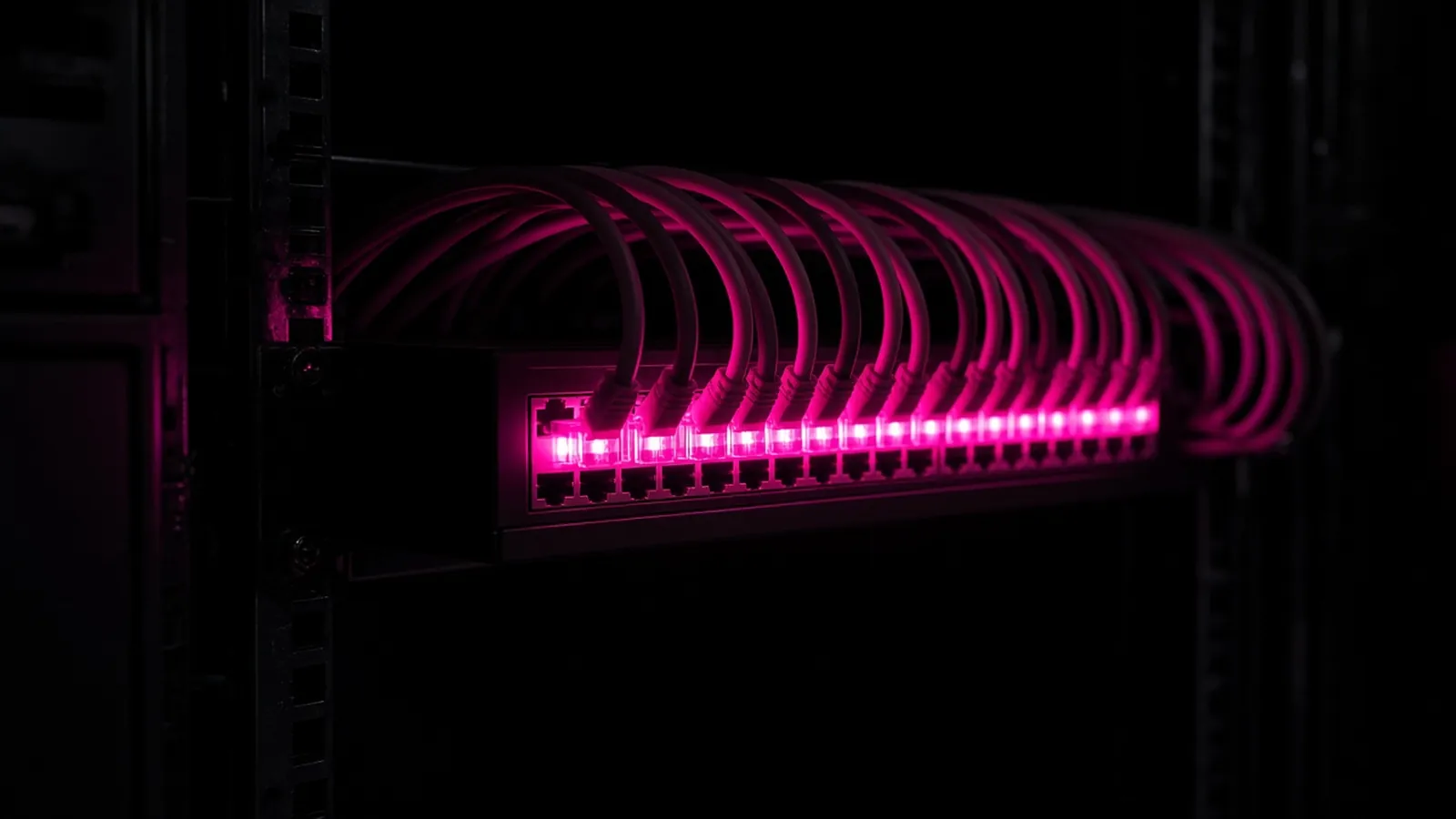
When the problem is physical, when it is urgent, or when it repeats. Physical problems include network hardware, wiring, connectivity at a new location, failed equipment, and anything that requires someone to look at a device rather than log into it. Urgent problems are the ones where an hour of travel is an hour of downtime.
Repeat problems are the hidden case. MetricNet's desktop support benchmark, published in 2012 and still the most widely cited figure on this, put average incident first-visit resolution at about 84%, ranging from roughly 70% to 97%. Every visit that does not resolve the problem becomes a second trip. When a partner is fifteen minutes away, that is a nuisance. When they are two states away, it becomes a day.
For everything else, including software, cloud systems, accounts, configuration, monitoring, and most support requests, remote work is faster and cheaper, and a good partner does it remotely by default.
Three things that are hard to get otherwise. The first is diagnosis by observation. Some problems are only visible in person: the switch in a closet that overheats, the access point mounted behind a metal shelf, the workstation that everyone shares a password for because it sits by the door.
The second is physical controls. Massachusetts regulation 201 CMR 17.00 requires businesses holding resident personal information to restrict physical access to records, which is covered in Massachusetts WISP requirements. Assessing physical access is hard to do from a remote session.
The third is context. A partner who has walked through your space understands how your team actually works, which is one of the eight inputs we require before recommending anything, described in recommendation before diagnosis. That understanding shapes recommendations long after the visit.
When your environment is mostly cloud, your hardware is standard, and nothing about your operations depends on a specific physical site. Plenty of Worcester and Shrewsbury companies fit that description, and for them proximity is a preference rather than a requirement.
The honest test is to look at the last year of problems. If nearly all of them were solved by someone logging in, geography matters less than responsiveness, competence, and contract terms. If several needed someone in the room, it matters a great deal.
Either way, the bigger risks are rarely about distance. They are about scope, accountability, and what happens when the relationship ends, covered in technology vendor contract exit terms and what your vendor's security posture means for you.
What is the actual response time for an on-site visit? Being nearby is only valuable if the partner can actually come. Ask for the committed time in writing, separately from remote response.
Who comes? The person who arrives should be able to fix the problem, not just observe it and schedule a follow-up. Ask whether on-site work is done by the same people who know your environment.
What happens when the local people are unavailable? A small local firm carries its own key person risk. The question is covered in the bus factor, and it applies to a vendor exactly as it does to an employee.
Is on-site work priced separately? Some agreements include it, others bill it by the hour plus travel. Neither is wrong, but you should know which you are signing. The pricing structure question in general is covered in retainer versus project.

Worcester and Shrewsbury sit along Route 9 and I-290, with Westborough, Northborough, Grafton, Auburn, and Marlborough all within a short drive. For a partner based in the area, that whole corridor is reachable the same morning. For a partner based in Boston, Worcester is often a planned trip rather than a quick one.
The connectivity at each location is also local. Shrewsbury's town-owned utility runs its own fiber network, which changes the options there, covered in Shrewsbury business internet. A partner who knows the local infrastructure saves you the research.
Distance also affects relationships in ways that are hard to measure. A partner who has stood in your server closet and met your office manager tends to notice problems before they become tickets. That kind of familiarity is easier to build when visits are routine rather than occasions.

We work across Worcester and Shrewsbury at Kief Studio, so read this knowing which side of the table this comes from. We do most of our work remotely, because that is usually the better way to do it, and we drive over when the problem is in the room. Two people deliver the output of a larger team through the method at ltfi.ai, and the reasoning is in the two-person studio model.
Brian Gagne leads infrastructure and security architecture, and briansgagne.com is the deeper technical read.
It depends on how many of your problems are physical or urgent. If most issues are solved remotely, responsiveness and contract terms matter more than distance. If you have network hardware, multiple sites, or equipment that fails in person, a partner who can drive over is worth weighting heavily.
Network hardware, wiring, connectivity at new locations, failed equipment, physical access controls, and diagnosis that requires seeing the environment. Software, cloud systems, accounts, and monitoring are usually handled remotely.
MetricNet's desktop support benchmark, published in 2012 and still widely cited, put average first-visit resolution at about 84%, so roughly one visit in six needed a follow-up. Distance determines how expensive that follow-up is.
The committed on-site response time in writing, who actually comes, what happens when the local staff are unavailable, and whether on-site work is included or billed separately.
Worcester and Shrewsbury, along with nearby Central Massachusetts towns such as Westborough, Northborough, Grafton, Auburn, and Marlborough, are typically reachable the same morning.
MarketsandMarkets puts the managed services market at $460.59 billion in 2026, and analyst estimates disagree by nearly $90 billion. To evaluate a managed service provider, start with what is excluded.
Chapter 30B sets how Massachusetts towns buy technology: sound business practice under $10,000, three written quotes up to $50,000, and sealed bids or proposals above that. School districts can use quotes up to $100,000.
NYDFS guidance issued October 2025 tells regulated entities to review provider agreements before termination. Three vendor contract exit terms do most of the work, and all three are negotiable at signing.
Work With Us
Kief Studio builds, protects, automates, and supports full-stack systems for businesses up to $50M ARR.
Newsletter
Strategy, psychology, AI adoption, and the patterns that actually compound. No spam, easy to leave.
Subscribe